
A pop-up video provides a richer and more immersive experience for readers, as it combines visual and audio elements to create a more dynamic presentation. In addition, it can help clarify complex concepts and provide more understandable content to readers with text dyslexia.
Next, let’s see how to add a [Vidéo contextuelle] action to an element.
Cliquez sur un élément du canevas -> cliquez [Actions] in the properties panel -> select a triggering timing -> [Vidéo contextuelle] -> select a video type
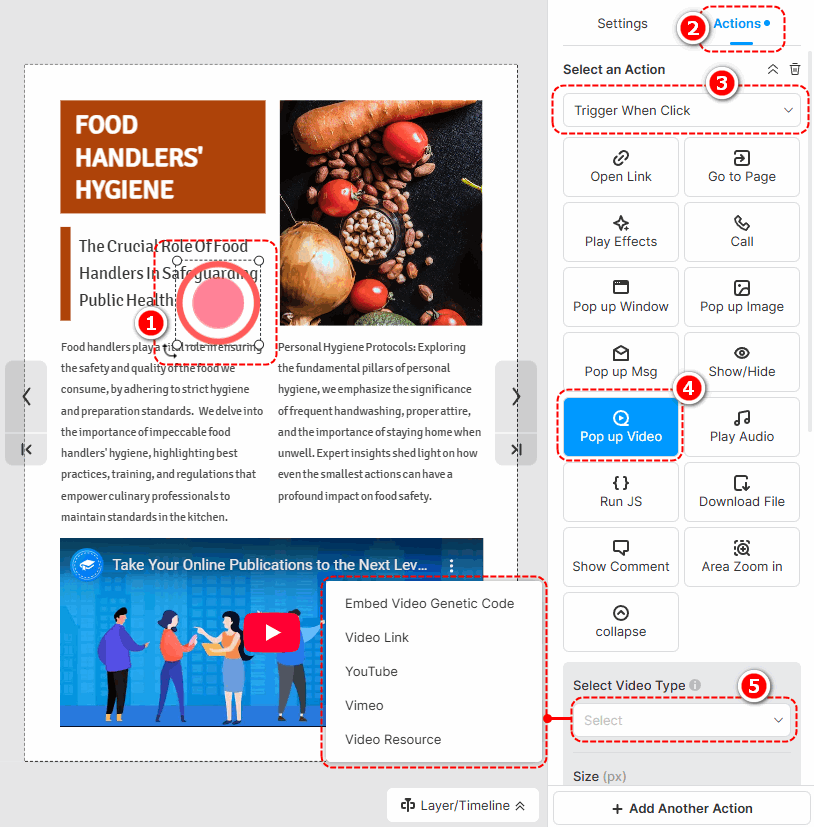
The following are the cautions for adding different types of pop-up videos.
- Embed Video Genetic Code: Paste an embed code of a video.
- Video Link: Use an online URL of a video to add a video.
- YouTube: Paste a YouTube video ID or URL to add a video.
- Vimeo: Paste a Vimeo video ID or URL to add a video.
- Video Resource: Cliquez sur [Ajouter une vidéo de la bibliothèque de gauche] to add a local video. (Check out how to upload a local video)
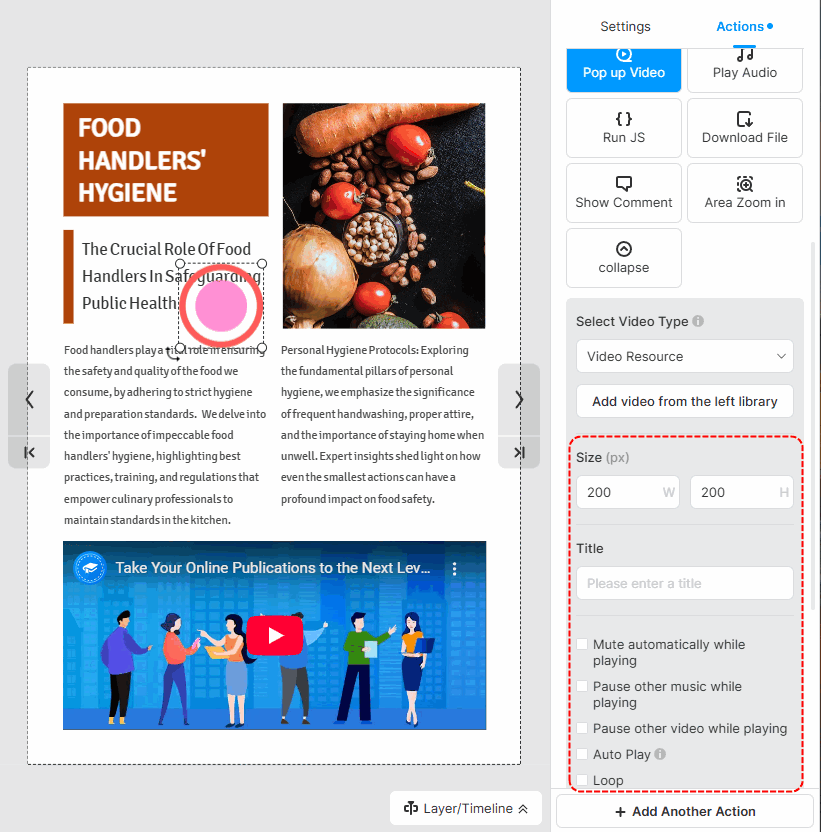
After successfully adding a video, you can set the size of the video, write a title, and choose its player settings.
▎Remarque :
1. Added videos by embedding the video genetic code are not allowed to customize player settings.
2. The YouTube and Vimeo videos are muted by default. So if you tick [Auto play] for those videos, you should manually turn their sound on when playing.
Termes liés à l'article :
vidéo pop-up, média pop-up, personnalisation de fenêtre pop-up, conception de pop-up, éléments interactifs, flipbooks interactifs, engagement de l'utilisateur, taille de pop-up, styles de pop-up, ajout d'éléments pop-up, édition de pop-up éléments, amélioration du multimédia, amélioration de l'interactivité


